Metz Regional Medical Center
L'Amour et les ForêtsMetz Regional Medical Center is the public hospital in Metz where Bénédicte Ombredanne receives psychiatric emergency care after taking an overdose of Xanax. Its role in her story is defined by urgent, limited intervention: the hospital assesses the immediate crisis, but cannot provide the refuge she seeks from her home life. Later, a public hospital in Metz reappears as her cancer advances and she needs medical care beyond what can be provided at home.
Psychiatric Emergency Care
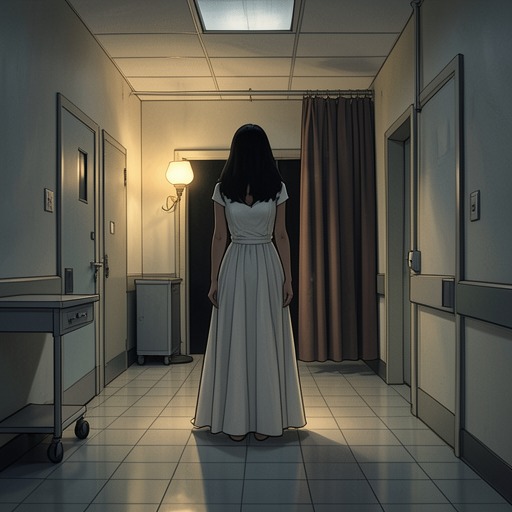
When Bénédicte wakes, she is told that she has been at the hospital for seventy-two hours and has already spoken with doctors several times, though she remembers none of it. She is in a private room in the psychiatric emergency department. The staff tell her that her condition is not considered serious and that two packs of Xanax are not generally fatal. They also explain that medication intoxication is a familiar reason for psychiatric emergency admissions in Metz.
Asked why she took the tablets, Bénédicte says she does not know; exhaustion or despair may have been involved. When the doctors ask what has made her despair, she offers little explanation. Her silence leaves the hospital with only a partial account of the crisis, even as her reluctance to return home signals that the immediate medical assessment does not capture all she is facing.
A Brief Stay and Transfer
The next day, Bénédicte is told she must leave. She asks to remain for a few more days because she wants rest and quiet, away from work and her family, but the emergency department is not intended for a prolonged stay, and the staff do not consider her condition sufficient to extend it. When the department head asks about possible risks in her family environment, she denies a particular problem, then becomes tearful without clarifying further.
The psychiatrist arranges her admission to Clinique Sainte-Blandine for roughly a fortnight rather than keeping her in emergency care. At the clinic, Bénédicte continues to describe severe fatigue and recurring insomnia while remaining guarded about her family. The transfer marks the boundary of the hospital’s role: it can stabilize and assess an acute episode, then refer her to a setting where she can stay longer and receive daily psychiatric appointments.
The Hospital in Later Crises
The hospital setting returns near the end of Bénédicte’s life. As her illness worsens, she tells Marie-Claire Ombredanne that she wants to go to hospital because she is too unwell to remain at home and needs medical support. Jean-François Ombredanne has dismissed her request as unnecessary, but Marie-Claire recognizes the urgency and helps her obtain care. Bénédicte is hospitalized for three days to regain strength; soon afterward, she is admitted to the public hospital in Metz to spend her final days.
Across these episodes, the hospital is both a necessary refuge and a limited one. It provides immediate psychiatric assessment after the overdose and, later, a place for urgent care when Bénédicte can no longer be adequately supported at home. The contrast with the domestic environment is central: at the hospital, her condition can be assessed by medical staff, while at home her expressed needs have repeatedly been minimized.